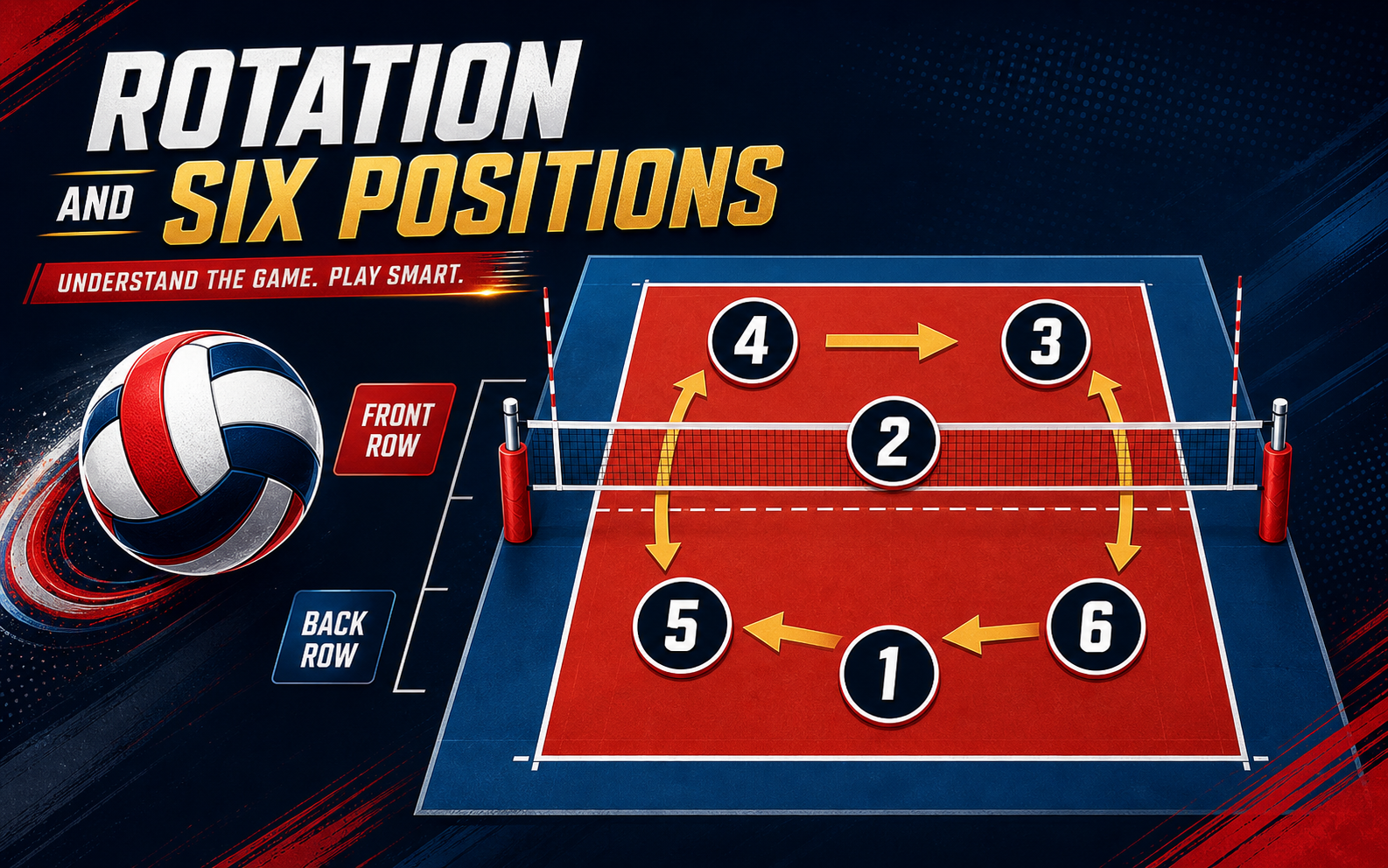
Volleyball rotation is built around six court positions. The serving team keeps its positions until it loses a rally; the receiving team rotates clockwise when it wins the right to serve.
The order matters at the moment of serve. Once the ball is served, players can move into the areas that fit their role: setters can run the offense, middle blockers can close to the net, and defenders can settle into back-row coverage.
Why Rotation Matters
Rotation keeps the game balanced. Every player moves through front-row and back-row responsibilities, so teams must plan serve receive, attacking lanes, and defensive coverage around who is currently in each row.
Front Row And Back Row
The three players nearest the net are front-row players. They can attack and block at the net. The three players behind them are back-row players. A back-row player can attack, but if they jump from in front of the attack line, the contact must follow the back-row attack restrictions used in standard indoor volleyball.
What To Watch
Before each serve, look for the setter. Many teams design their receive pattern around protecting the setter’s path to the ball. If the pass is clean, the setter can use every attacker and make the block guess.